How to Make AI Content Creation Work for Affiliate Sites
Building an affiliate website from scratch can feel like trying to push a boulder uphill. You need solid content, steady traffic, and a way to turn visitors into buyers. For years the only route was to write everything yourself or pay someone with real experience. Both options cost time or money, often more than a solo operator has. That is where ai content creation enters the picture, not as a magic wand but as a practical tool that changes how you approach the whole process.
The trick is knowing what ai content creation can and cannot do. I have spent the last few years testing different tools, failing in some places and succeeding in others. What follows is a grounded look at how to use these systems to build affiliate sites that actually earn, without pretending you are a coder or an influencer.
Why Affiliate Sites Need a Different Kind of Content
Affiliate marketing depends on trust. When you recommend a product on your site and link out through programs like the Amazon affiliate program, ClickBank, Commission Junction, or ShareASale, your reader is making a decision based on your authority. They want to know if that blender, course, or software subscription is worth their cash. Writing that kind of persuasive content used to mean sitting down for hours, researching specs, testing products, and crafting honest opinions.
Now tools like ChatGPT, Jasper AI, and Copy.ai can produce drafts in seconds. The temptation is to hit publish immediately and move on. That approach rarely works. Search engines, especially with updates built around RankBrain, are getting better at spotting shallow content. Google Search Console and Google Analytics will show you quickly if your pages are bouncing visitors right back to the results page. The goal is not to replace your thinking but to speed up the first draft so you can spend more time on refinement.
Choosing the Right Tools for the Job
Not every ai writing tool fits every stage of your workflow. ChatGPT from OpenAI is great for brainstorming angles and generating outlines. Jasper AI excels at longer-form content and can hold a consistent voice across multiple sections. Copy.ai works well for short product descriptions and email sequences that feed into your site promotion. I use all three depending on what I need on a given day.

After the draft is done, the real work begins. You need to check facts, adjust tone, and ensure the piece actually helps someone make a purchase decision. This is where SEO tools like Surfer SEO, Ahrefs, and Semrush come into play. They help you see what terms your competitors are ranking for and whether your article covers the topic thoroughly enough. I have found that running a draft through Surfer SEO before editing saves me from writing entire sections that miss the mark.
WordPress remains the best home for this content. Its plugin ecosystem means you can connect everything from analytics to affiliate link management without touching code. If you are just starting out, Medium can be a useful testing ground for your writing style, but eventually you will want your own site to control the monetization and the data.
Practical Steps for Writing with AI Assistance
Here is a process that has worked for me across several niche sites:
- Start with a keyword you know your audience searches for. Use Ahrefs or Semrush to find a topic with decent volume and a clear buyer intent.
- Feed that keyword into ChatGPT and ask for a detailed outline. Do not accept the first version. Push it to add specific subpoints and questions a buyer would ask.
- Write the first section yourself to set the voice. Then use Jasper AI to expand each bullet into a paragraph. Edit every sentence for accuracy and flow.
- Run the full draft through Surfer SEO to check content length, keyword density, and related terms you might have missed.
- Publish on WordPress, monitor performance in Google Search Console, and adjust based on what readers actually click.
This workflow keeps you in control while cutting the writing time by at least half. The key is that you remain the editor. The AI is an assistant, not the author.
What the Experts Actually Do
People like Neil Patel, Brian Dean, and the team at Backlinko have built careers on teaching content marketing. If you read their work closely, you will notice a pattern. They do not write generic advice. They include specific numbers, case studies, and personal stories. Brian Dean at Backlinko often shares his own site data to prove a point. Neil Patel uses screenshots from his own analytics. HubSpot publishes detailed research reports that their readers can apply directly.
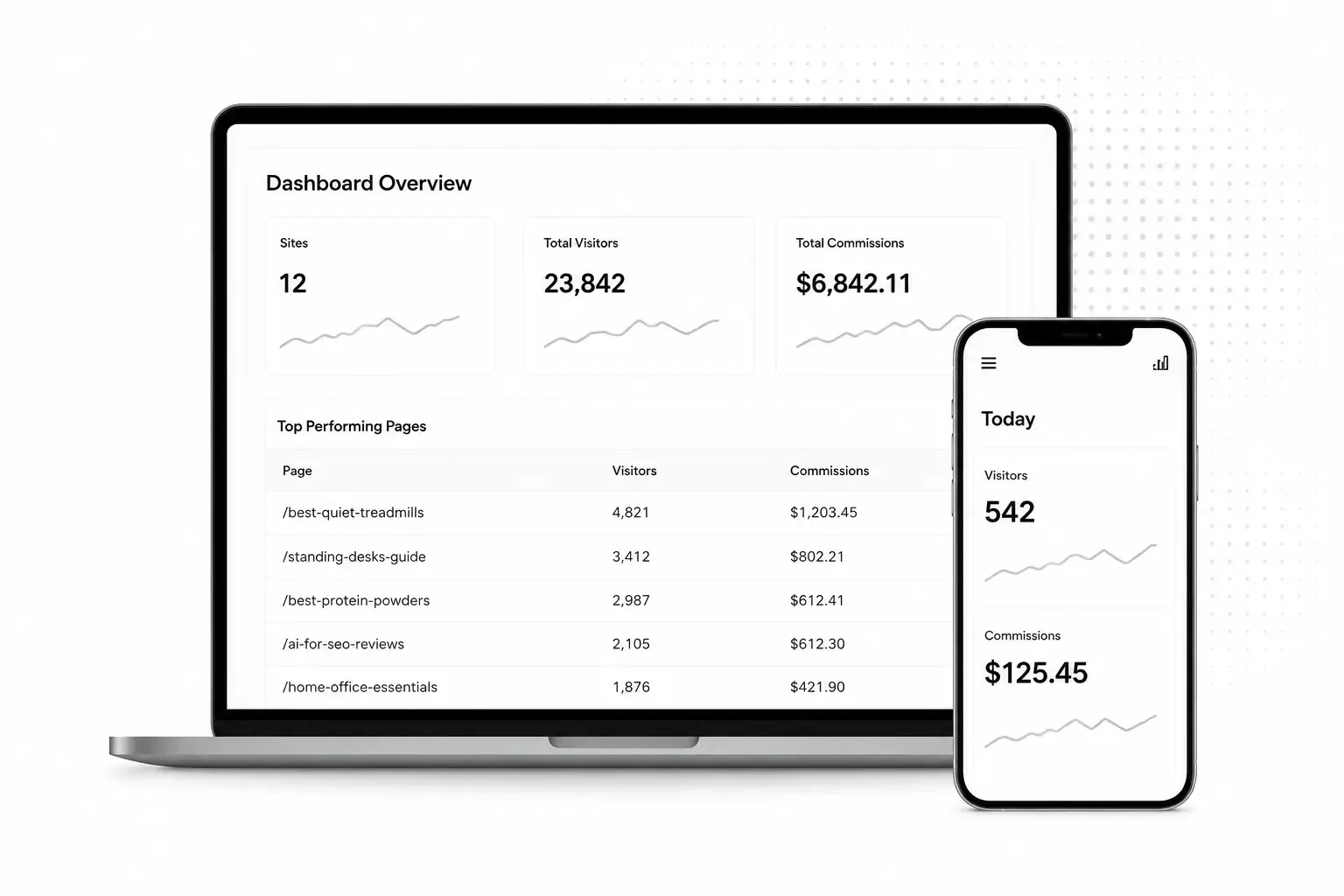
You can use ai content creation to mimic that level of specificity, but only if you feed it the right raw material. For example, if you are writing about a course on ClickBank, take the course yourself first. Then ask the AI to structure your notes into a review. Your firsthand experience is what separates a helpful article from a rewrite of the sales page.
Common Mistakes That Kill Affiliate Content
I have made most of these mistakes myself, so I can tell you they are easy to fall into:
- Publishing AI drafts without editing. The writing is usually correct but bland. Readers can tell when a paragraph has no human voice behind it.
- Ignoring search intent. If someone searches for "best running shoes for flat feet," they want a comparison, not a history of sneaker manufacturing. RankBrain and other algorithms now punish content that misses the point.
- Using too many affiliate links. Two or three well-placed links inside a 1500-word article convert better than ten links scattered everywhere. Quality over quantity applies here too.
- Forgetting about promotion. Writing is only half the battle. Share your articles on social media, build an email list, and reach out to other site owners for backlinks. Google Analytics will show you which channels actually send traffic.
Measuring What Matters
Once the content is live, the real test begins. Open Google Search Console and look at which queries bring people to your page. If the clicks are high but the average position is low, your title and meta description are working but the content is not satisfying the search intent. If the impressions are high and clicks are low, your headline might be misleading or your snippet lacks a call to action.
Google Analytics will show you how long people stay on the page and whether they visit other parts of your site. A high bounce rate on an affiliate article usually means the reader did not find what they expected. That is a signal to rewrite the opening or adjust the angle entirely. I have rewritten entire articles three or four times before they started earning consistently.
Building a Sustainable System
Over time, you develop a rhythm. The AI handles the heavy lifting of structuring ideas and generating multiple variations. You handle the judgment, the personal experience, and the final polish. This combination is what makes ai content creation a realistic path for building affiliate sites without technical skills or an existing audience.

The tools mentioned here, from ChatGPT and Jasper AI to Surfer SEO and Ahrefs, are not going anywhere. They will only get better at understanding context and nuance. The advantage goes to the person who learns to direct them well, not to the person who tries to automate everything and walk away.
Start small. Pick one product you know well. Write a single review with the help of AI. Publish it, track it, and improve it based on real data. That loop is how a side project turns into a passive income stream that works while you sleep.